How do you optimize a product page for SEO?
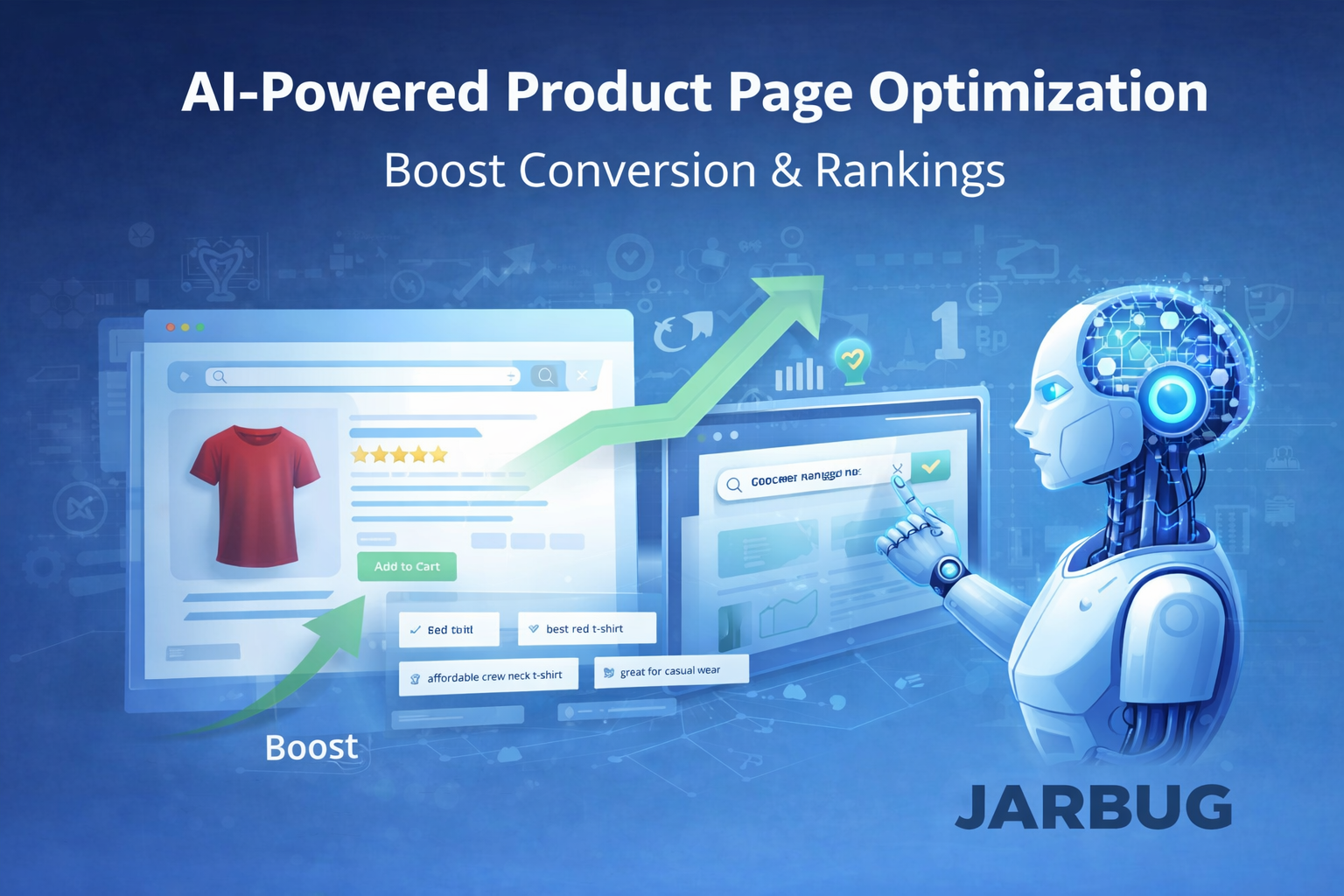
To optimize a product page for SEO, focus on long-tail keywords, relevant metadata, fast load times, unique descriptions, and strong internal links to related products.
What are the benefits of optimizing product pages?
Optimizing product pages increases organic traffic, improves search rankings, boosts conversions, and lowers reliance on paid ads for ecommerce brands.
Which elements impact product page SEO the most?
Key elements include targeted keywords, well-structured metadata, engaging content, optimized images, and automated internal linking.
Can automation help optimize product pages at scale?
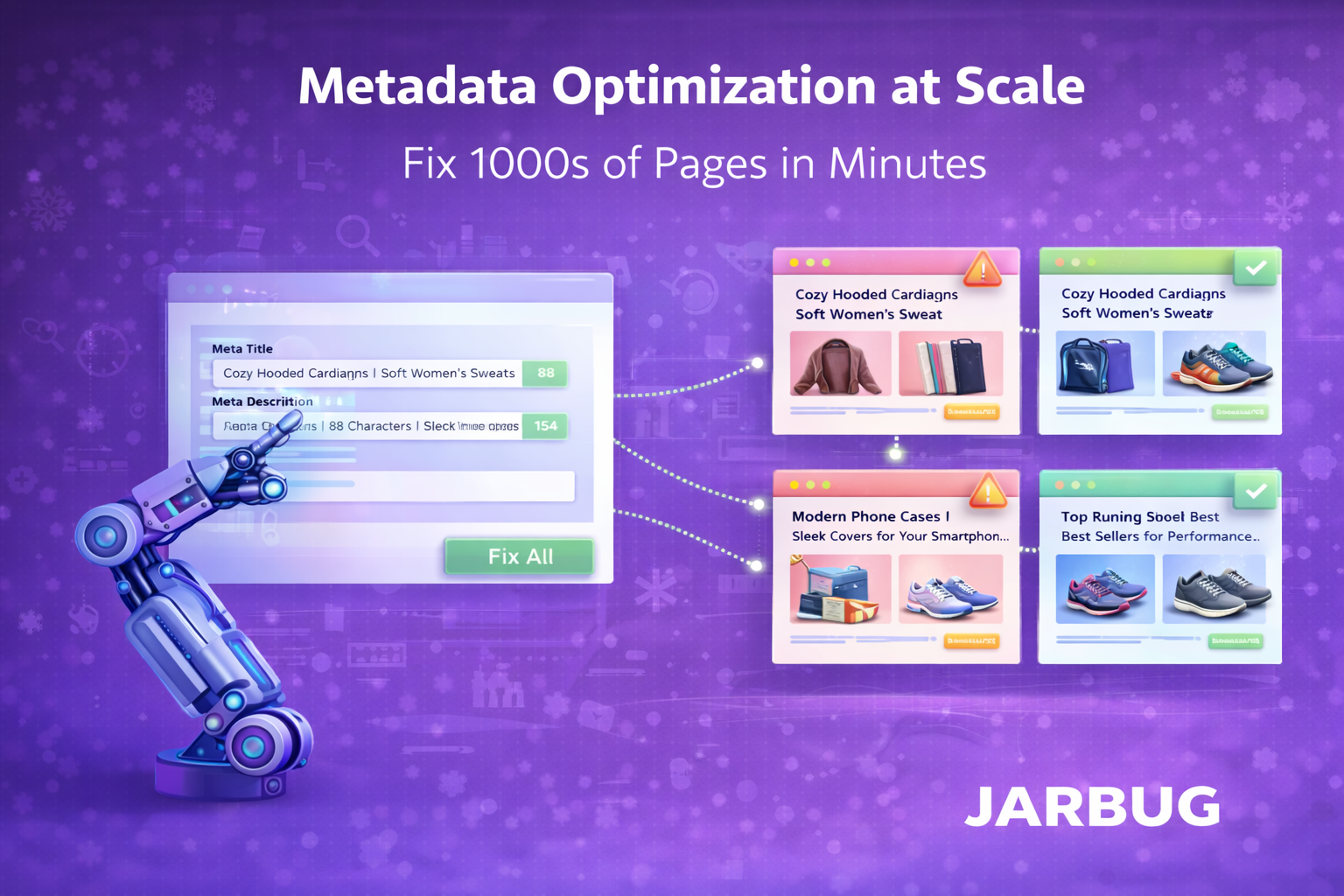
Yes, automation enables bulk updates for metadata, internal links, and content, making it possible to optimize thousands of product pages quickly.
Is programmatic SEO effective for large ecommerce catalogs?
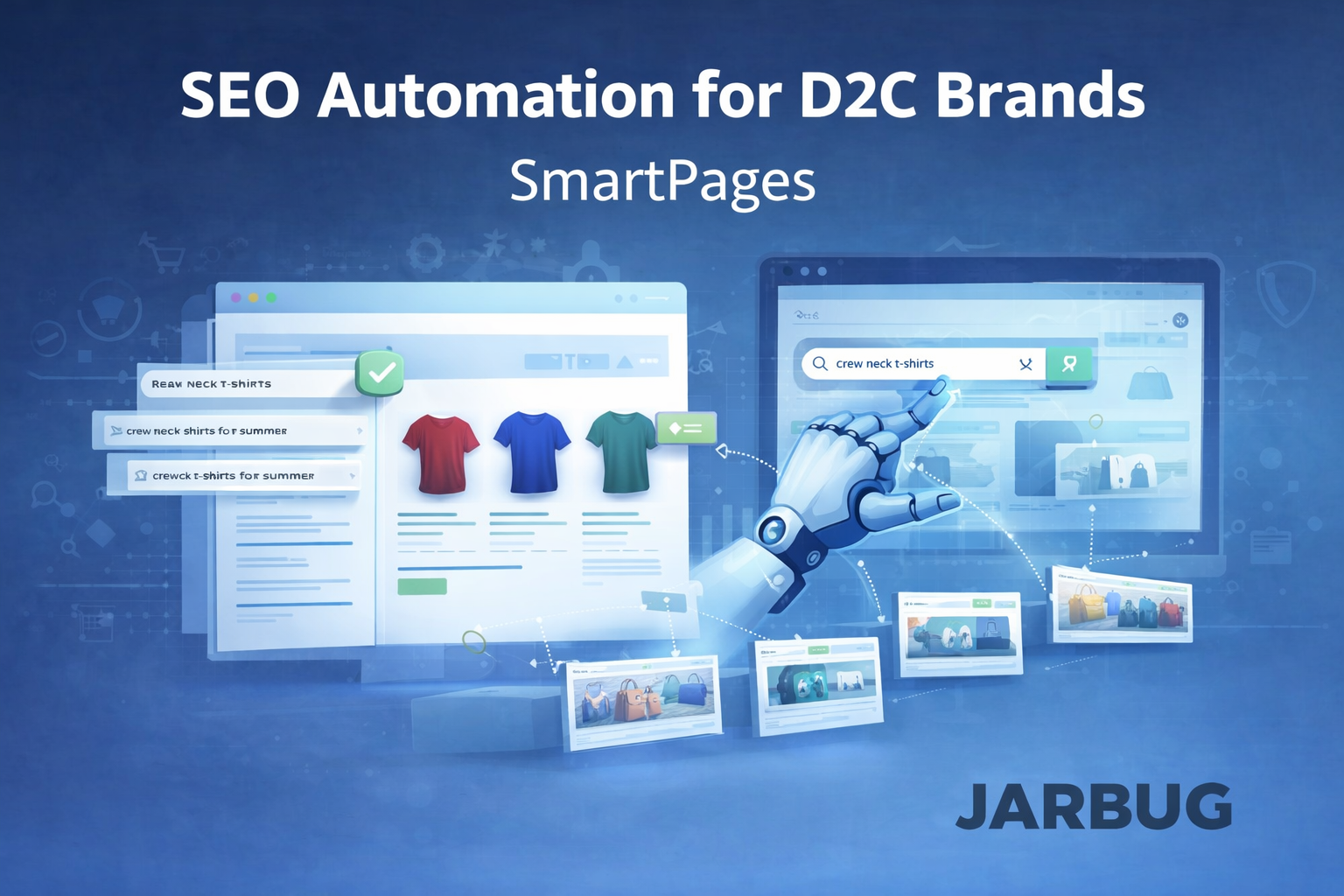
Programmatic SEO is highly effective for large catalogs, allowing brands to target long-tail queries and scale content without manual effort.
How does optimizing product pages reduce customer acquisition cost?
By improving organic rankings and capturing search traffic, brands can reduce dependence on paid ads and lower overall customer acquisition costs.
What is internal linking automation and why is it important?
Internal linking automation builds connections between relevant product and category pages, passing authority and improving site navigation for users and search engines.
Why do ecommerce brands move from agencies to automation platforms?
Brands switch for lower costs, faster deployment, and the ability to scale SEO without hiring large content or development teams.
How does Jarbug optimize product page SEO differently?
Jarbug automates keyword targeting, internal linking, metadata, and content creation so ecommerce brands can scale SEO without manual workflows or agencies.
Does Jarbug support programmatic SEO for multiple industries?
Yes, Jarbug's automation tools support programmatic SEO for fashion, beauty, electronics, home decor, kids, seasonal products, and global ecommerce stores.