
Search demand forecasting with ai
AI-Powered Product Page Optimization - Boost Conversion & Rankings
$0.00
SEO
Digital Marketing
Automation
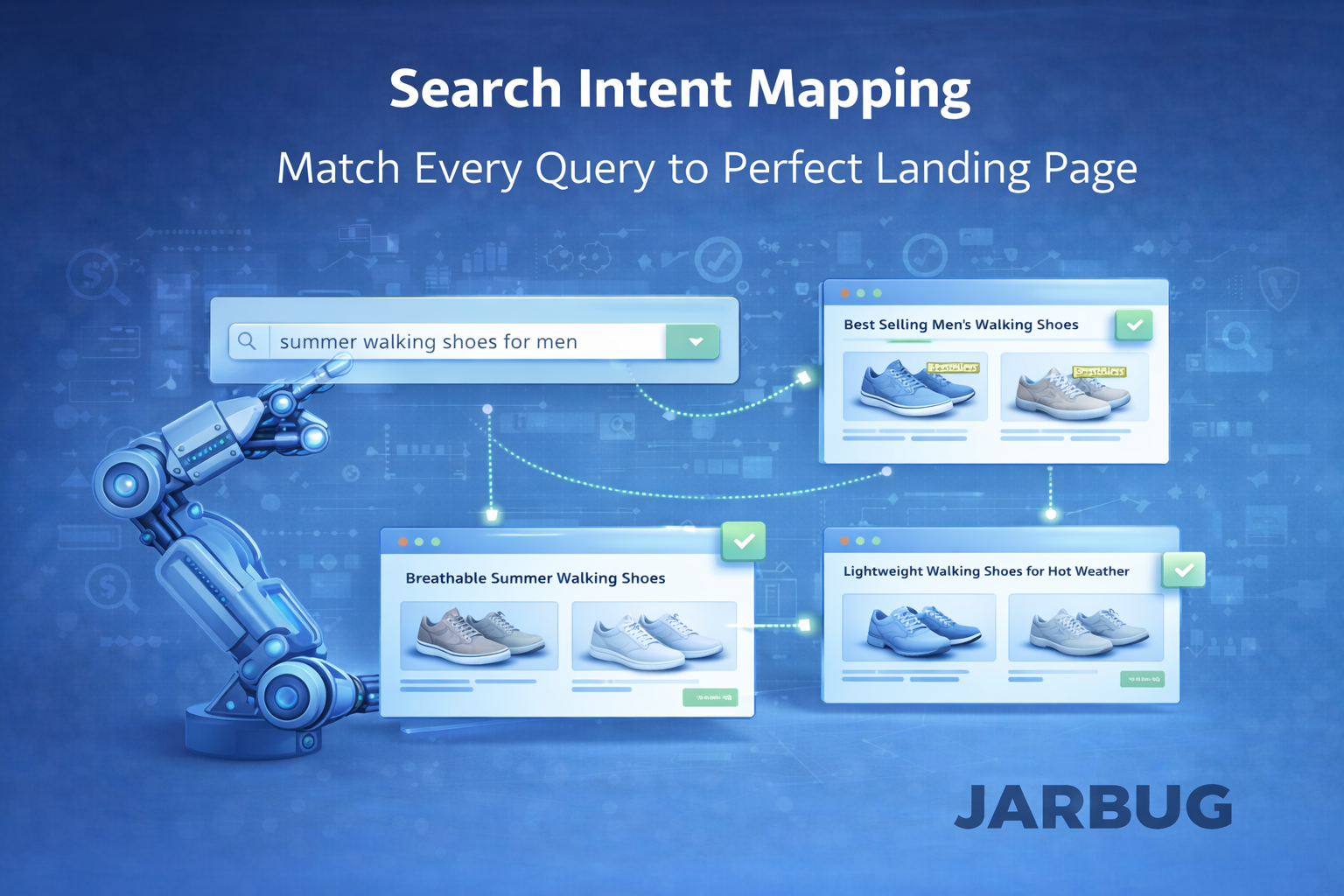
Search Intent Mapping - Match Every Query to Perfect Landing Page
$0.00
SEO
Digital Marketing
Automation
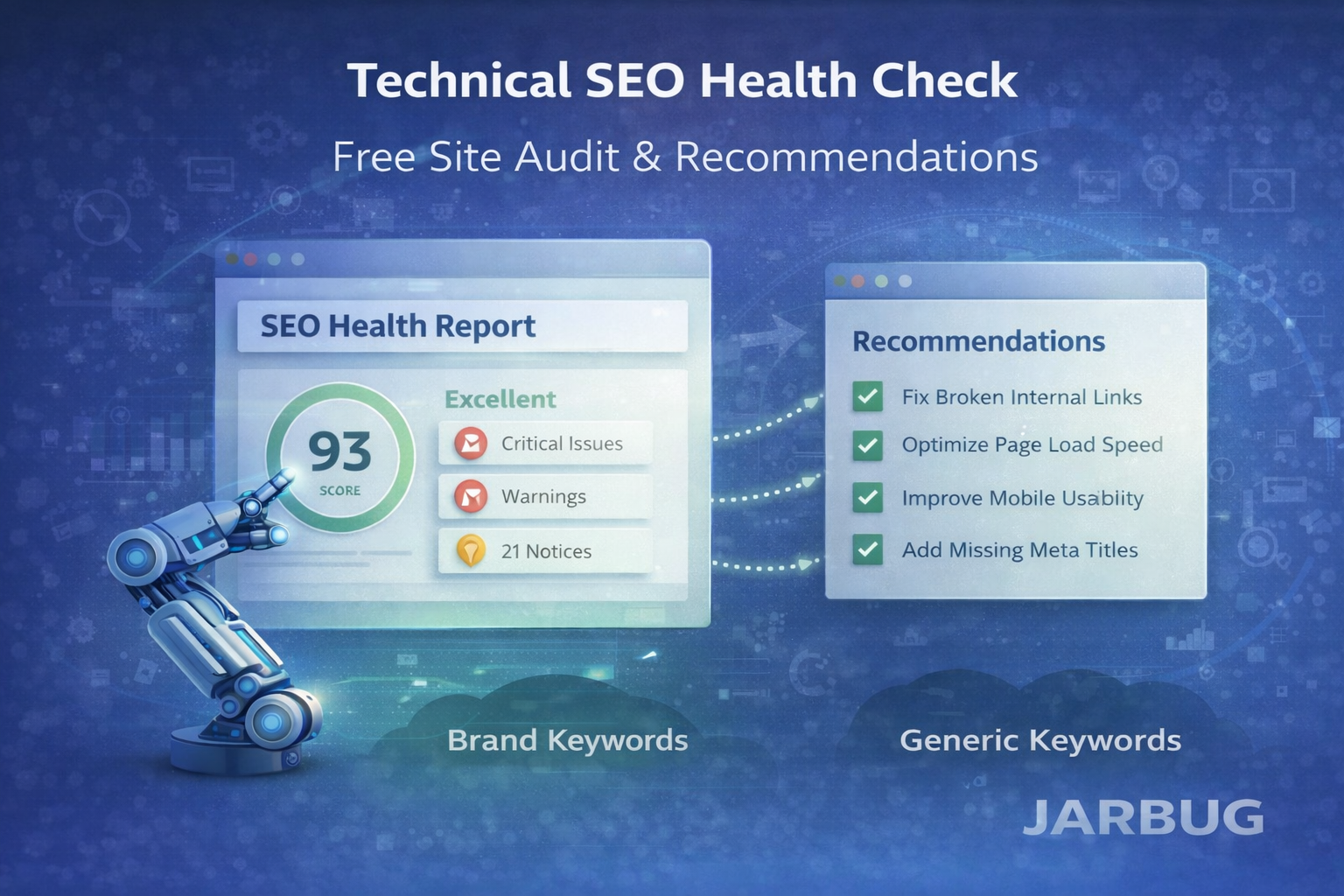
Technical SEO Health Check - Free Site Audit & Recommendations
$0.00
SEO
Digital Marketing
Automation
Understanding Search Demand Forecasting with AI
Predicting what customers will search for next is a challenge every ecommerce team faces. Search demand forecasting with AI brings data-driven clarity to this process, allowing you to anticipate market shifts and adjust your strategy before competitors catch on. Instead of relying on guesswork, you can use real search behavior and trend analysis to inform your decisions.
How Does Search Demand Forecasting Work?
Traditional forecasting methods often rely on past sales reports and basic keyword research. While these approaches can spot patterns, they usually miss out on new trends and shifts in customer intent. AI-driven tools, like those offered by Jarbug, scan millions of search queries, track seasonality, and highlight emerging opportunities. This means you can react quickly to changes, keep your inventory relevant, and create content that matches what your audience is actually looking for.
| Manual Forecasting | AI-Enhanced Forecasting |
|---|---|
| Relies on historical data | Combines real-time search data and trend signals |
| Slow to adapt to new trends | Responds to market changes instantly |
| Manual updates and analysis | Automated insights and recommendations |
Real-World Benefits for Ecommerce Teams
- Faster decision making: Spot surges in search interest before they peak.
- Efficient content planning: Create landing pages and product descriptions that match search demand.
- Better inventory management: Prepare for seasonal changes and avoid overstock or missed sales.
- Lower marketing costs: Focus on organic traffic instead of expensive ad campaigns.
Case Example: Preparing for Seasonal Trends
Imagine a home decor retailer who wants to get ahead of the holiday rush. With search demand forecasting powered by AI, they notice a spike in searches for "eco-friendly ornaments" in early October. Instead of waiting for competitors to catch up, they launch relevant product pages and email campaigns two weeks ahead of the trend. The result is higher organic traffic and better conversion rates, all with less ad spend.
How Jarbug Streamlines the Process
Jarbug helps ecommerce brands automate search demand forecasting and related SEO tasks. The platform analyzes search trends, suggests high-potential topics, and can even generate content for you. This means you do not need a large content team or outside agency to keep your store visible and relevant. Internal linking is handled automatically, and new landing pages are created in hours, not weeks.
Measuring Impact: What to Expect
| Before AI Forecasting | After AI Forecasting |
|---|---|
| High customer acquisition costs | Lower costs through organic growth |
| Missed seasonal trends | Early response to new opportunities |
| Manual content creation | Automated content for trending topics |
Programmatic SEO and Long-Tail Opportunities
One of the biggest advantages of search demand forecasting with AI is the ability to scale programmatic SEO. Instead of writing one page at a time, you can launch hundreds or thousands of landing pages that target specific search queries. This is especially useful for ecommerce stores with large catalogs or products that change seasonally. For example, a fashion retailer can quickly respond to new color trends, while an electronics store can highlight the latest device features as soon as consumers start searching for them.
Tips for Getting Started
- Start by identifying your most important product categories and target markets.
- Use AI-powered tools to analyze search trends and spot early signals of demand shifts.
- Align your content and inventory with what shoppers are searching for now, not just what sold well last year.
- Review performance regularly and adjust your strategy to stay ahead of the curve.
About Jarbug
Jarbug works with ecommerce and D2C brands to automate search demand forecasting and SEO. We help you stay ahead of market trends, reduce costs, and grow your organic presence with less manual effort. Visit Jarbug
Frequently Asked Questions
What is search demand forecasting with AI?
Search demand forecasting with AI is the process of using artificial intelligence to predict which keywords and topics people will search for in the future. This helps ecommerce brands create relevant content, manage inventory, and capture organic traffic as trends emerge.
How does AI improve forecasting compared to manual methods?
AI analyzes large volumes of search data in real time, identifies patterns that humans might miss, and updates predictions as trends shift. This leads to more accurate and timely insights than manual forecasting.
Why is search demand forecasting important for ecommerce?
It helps ecommerce businesses anticipate customer needs, prepare for seasonal shifts, and create content that matches search intent. This leads to higher visibility, more sales, and better use of marketing resources.
Can search demand forecasting with AI reduce reliance on paid ads?
Yes. By focusing on organic search trends, brands can attract high-intent traffic without spending as much on advertising, which lowers customer acquisition costs.
Which industries benefit most from AI-powered demand forecasting?
Industries like fashion, beauty, electronics, home decor, and seasonal retail see strong results. These sectors often experience fast-changing trends where accurate forecasting provides a competitive edge.
Is manual forecasting still useful for ecommerce?
Manual forecasting may provide some insights but is usually slower and less precise than AI-driven methods. Most growing brands now use AI to stay competitive.
How does programmatic SEO relate to search demand forecasting?
Programmatic SEO uses AI to generate landing pages for many targeted search queries. When combined with demand forecasting, this approach helps brands capture long-tail traffic efficiently.
What are the main advantages of automating search demand forecasting?
Automation speeds up content creation, improves accuracy, reduces costs, and makes it easier to scale your SEO efforts without needing a large team.
How does Jarbug help automate search demand forecasting?
Jarbug analyzes search trends, suggests high-potential topics, and can create optimized content and internal links automatically. This helps ecommerce brands respond quickly to market changes.
What makes Jarbug different from traditional SEO agencies?
Jarbug replaces manual, time-consuming workflows with automated tools. It is faster, more affordable, and does not require a large team or outside agency to deliver results.
You May Also Like
buy ai demand forecasting platform
purchase demand forecasting software
ai seo for fashion ecommerce
replace manual seo with ai
ai seo tool for ecommerce
ai seo solution for apparel
ai seo software for agencies
ai seo for ecommerce websites
ai seo tool for fashion
ai powered seo for revenue growth
ai seo for electronics brands
replacing seo agencies with ai
buy ai seo software
seo ai tools free
buy ai tool for seo
purchase ai keyword optimizer