
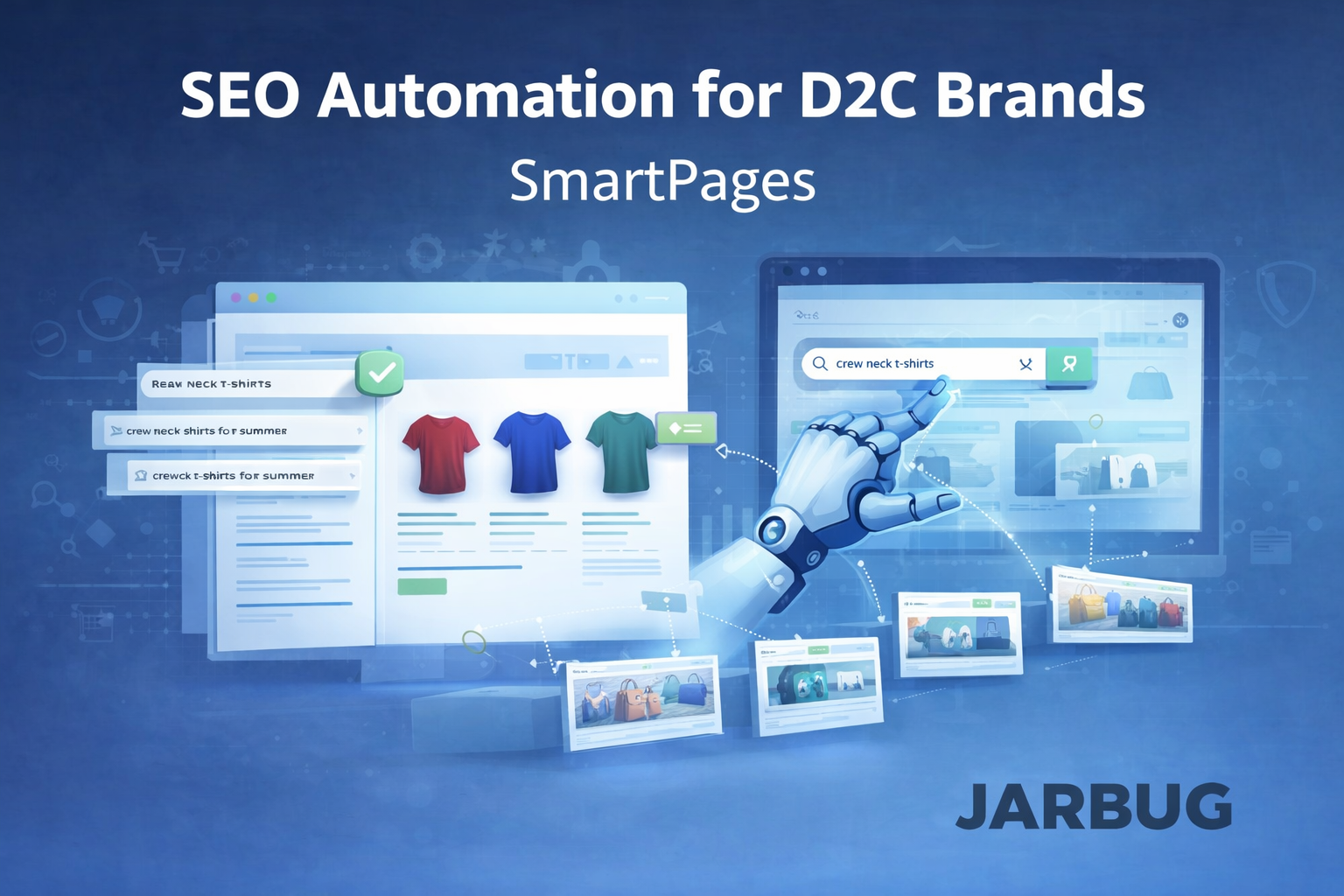
Content automation for ecommerce
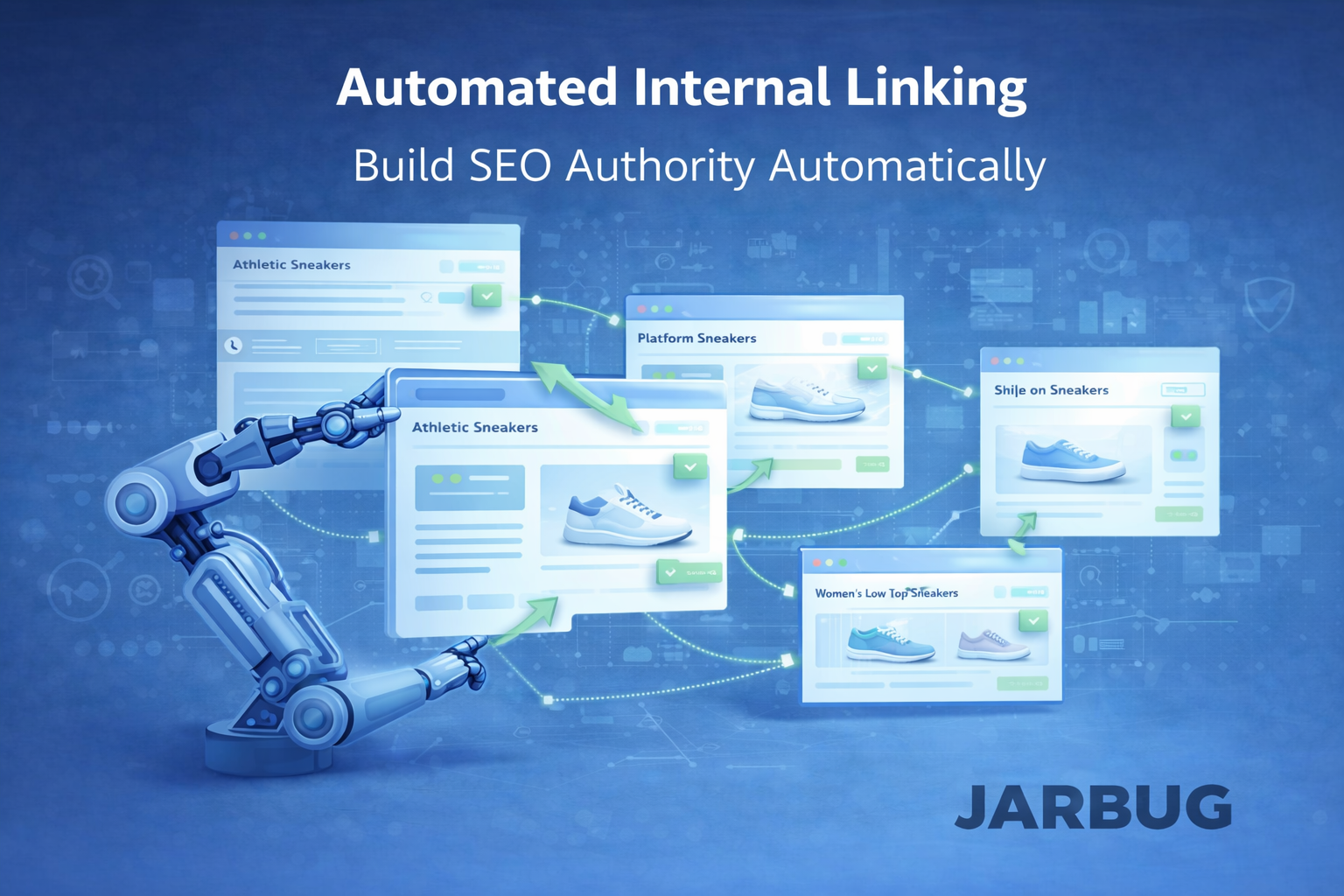
Automated Internal Linking - Build SEO Authority Automatically
$0.00
SEO
Digital Marketing
Automation
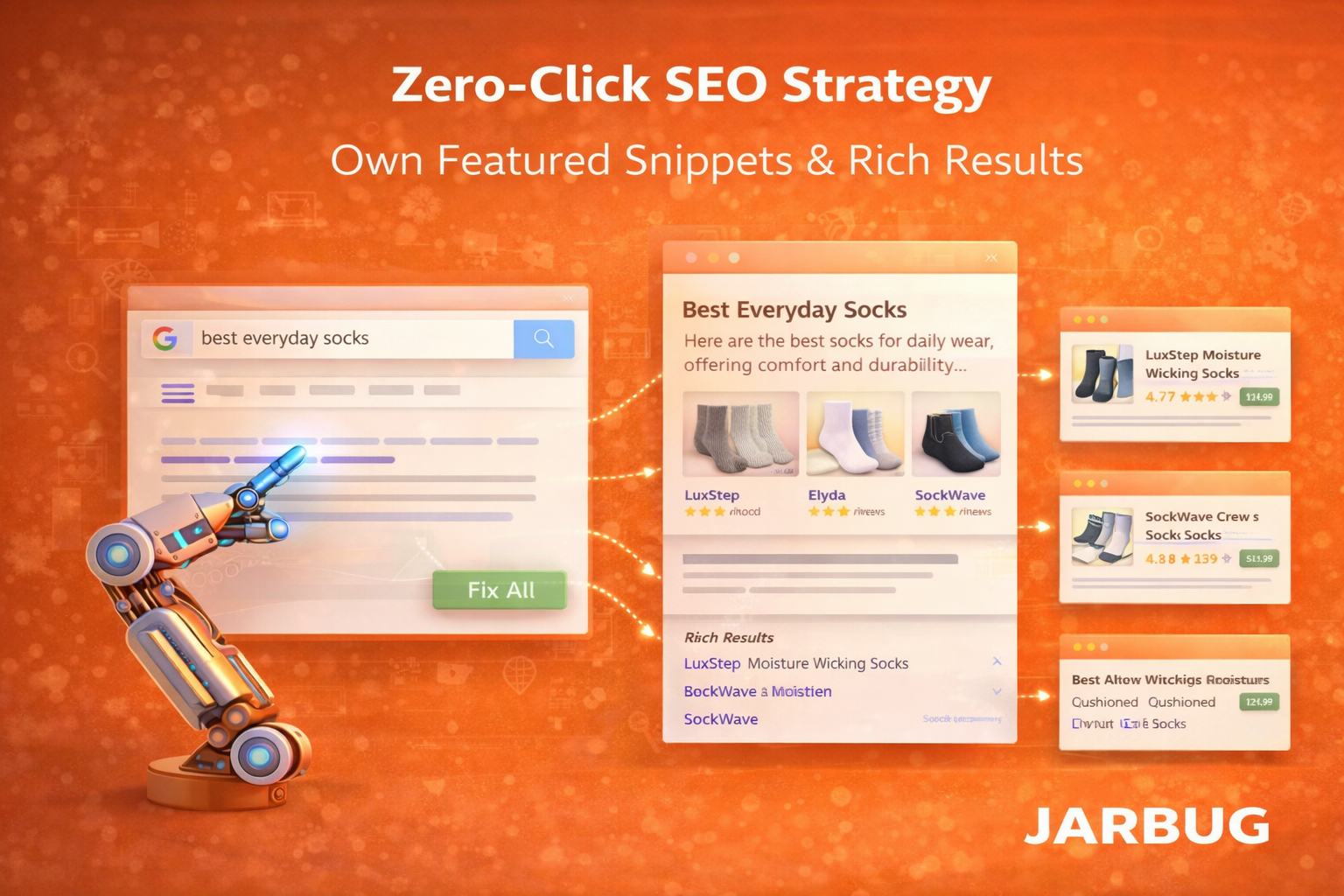
Zero-Click SEO Strategy - Own Featured Snippets & Rich Results
$0.00
SEO
Digital Marketing
Automation
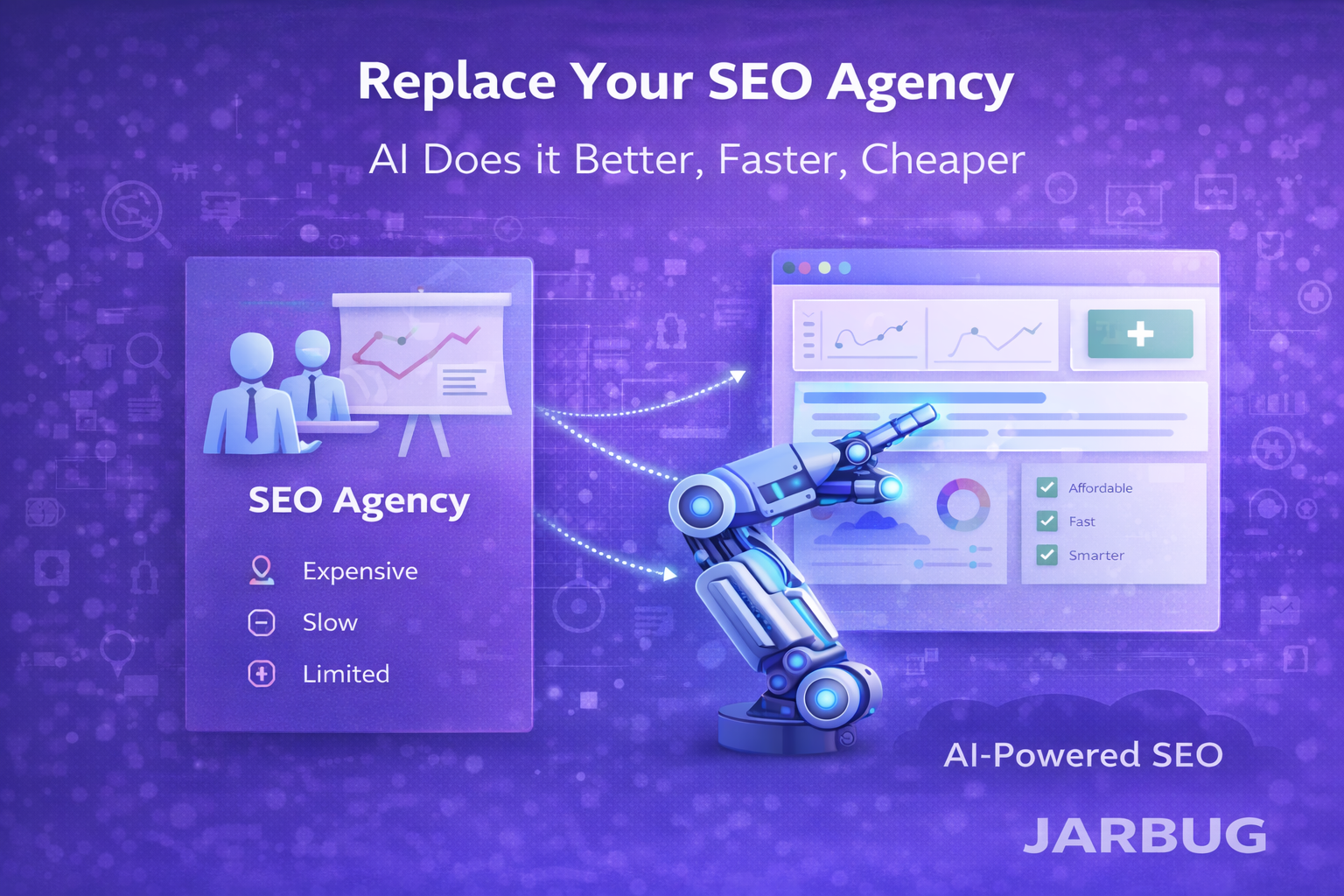
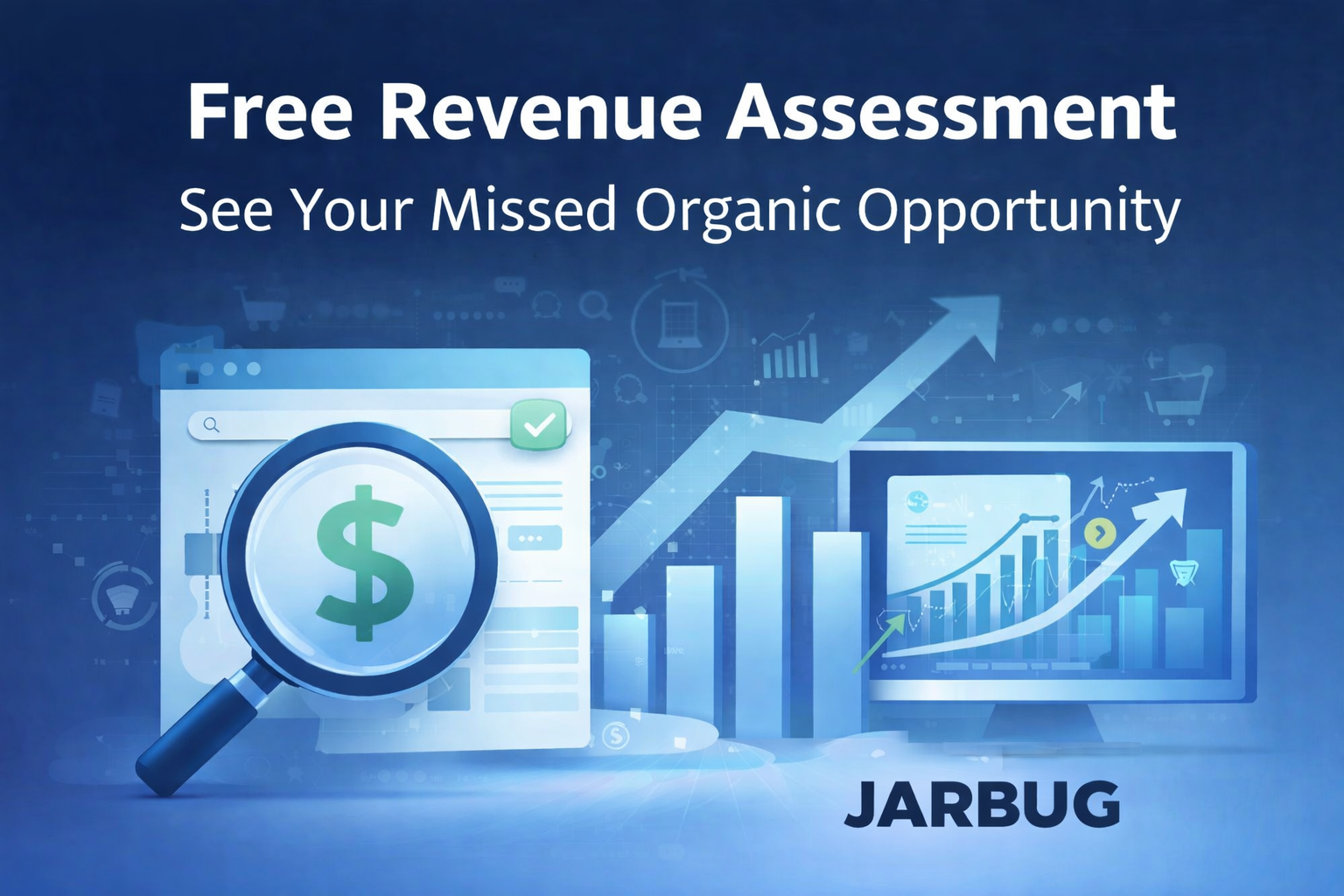
Free Revenue Assessment - See Your Missed Organic Opportunity
$0.00
SEO
Digital Marketing
Automation
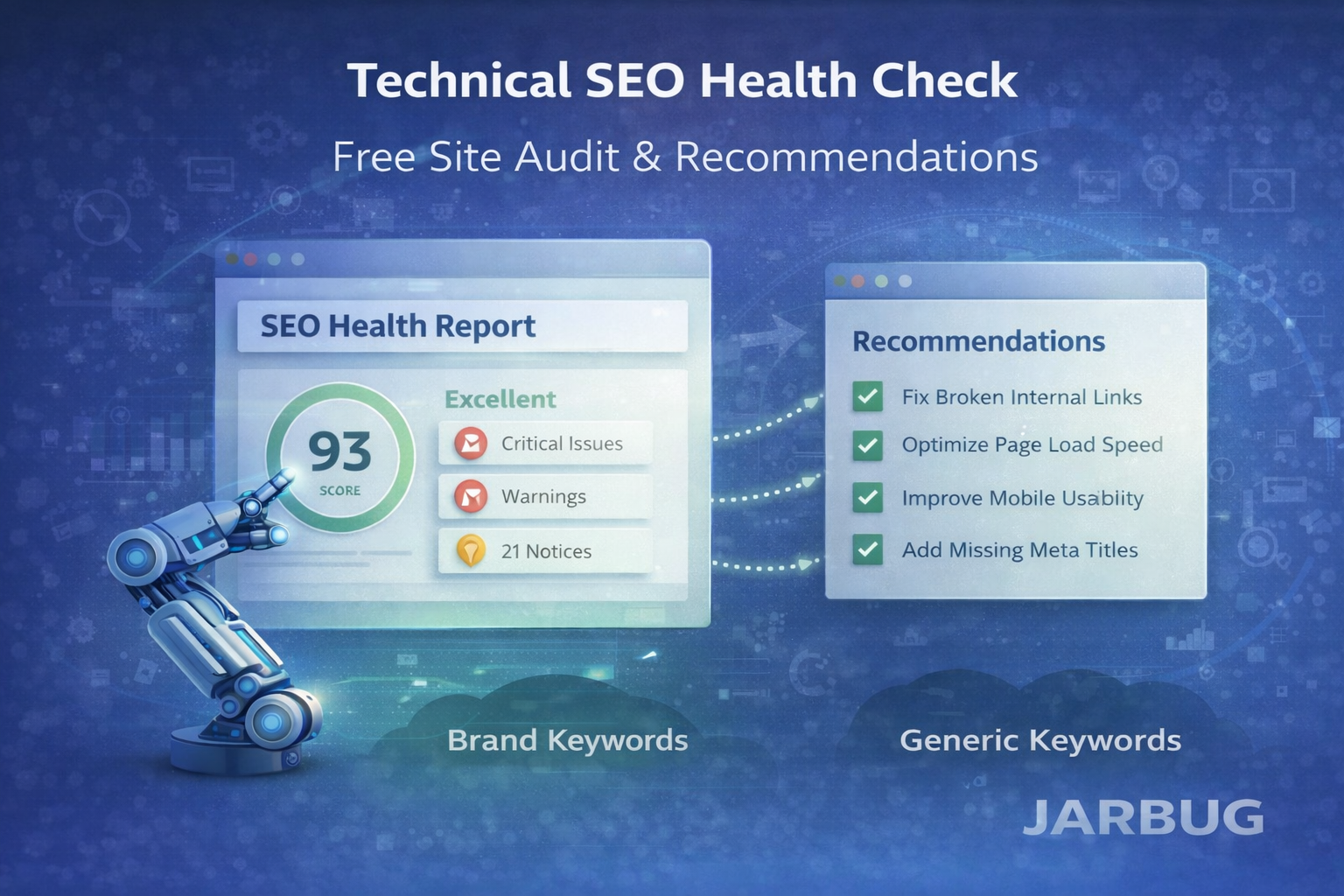
Technical SEO Health Check - Free Site Audit & Recommendations
$0.00
SEO
Digital Marketing
Automation
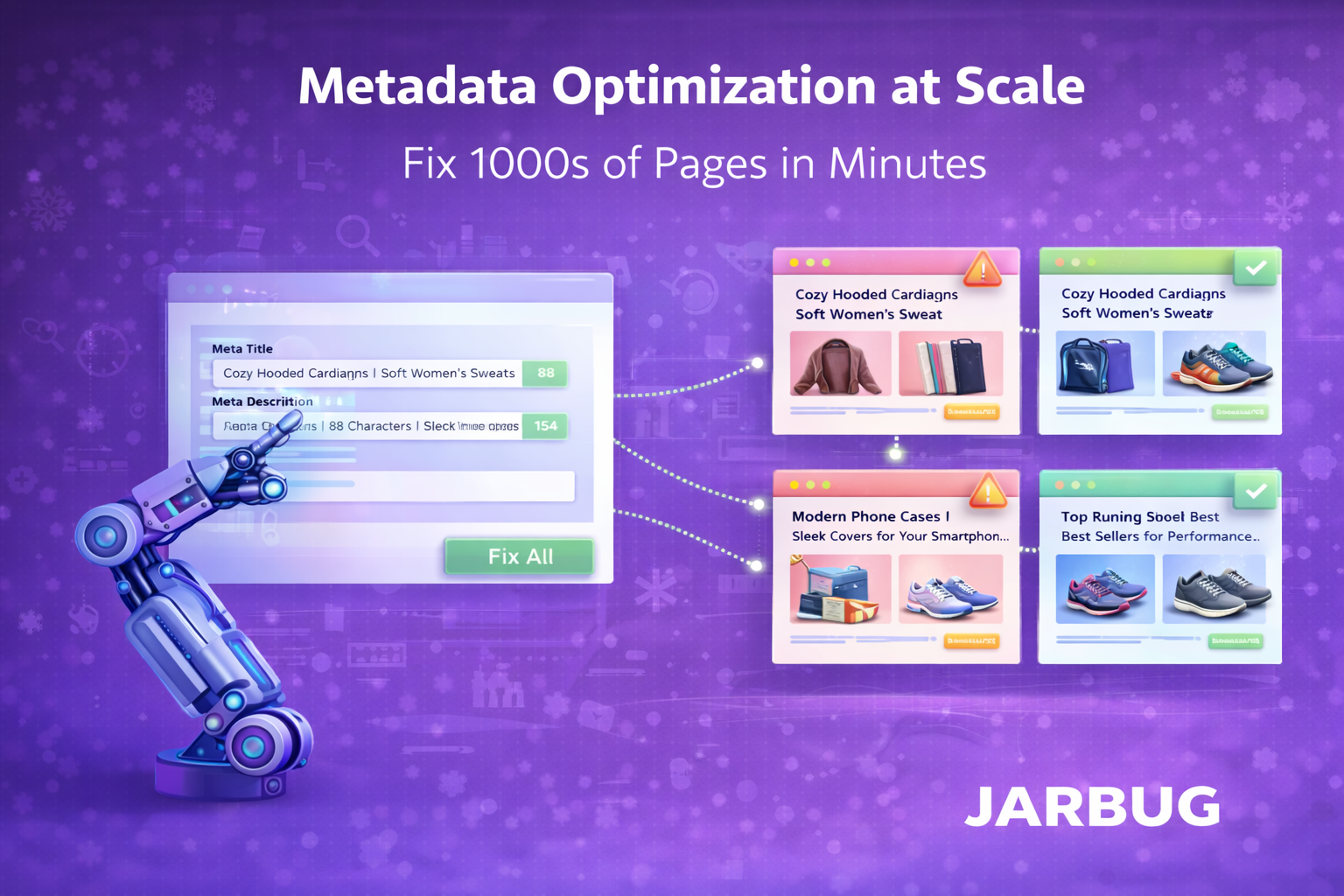
Metadata Optimization at Scale - Fix 1000s of Pages in Minutes
$0.00
SEO
Digital Marketing
Automation
Why Ecommerce Brands Need Content Automation
Content automation for ecommerce has become essential for brands that want to grow without letting costs spiral out of control. Manual SEO and content production often can't keep up with frequent product launches, changing trends, and large catalogs. If you run a store in categories like fashion, beauty, electronics, home decor, or kids' items, automating your content can help you attract more organic visitors and turn them into buyers.
Manual vs Automated Content Workflows
| Manual SEO Agencies | Automated Platforms (Jarbug, Salesmanago, Activepieces) |
|---|---|
| Weeks to launch new pages | Minutes to publish at scale |
| High monthly retainer fees | Significantly lower cost |
| Manual internal linking | Automated linking for better SEO |
| Slow metadata updates | Bulk metadata updates |
Launching and Updating Content at Scale
If your ecommerce team is frustrated by delays from agencies or the back-and-forth with freelancers, content automation for ecommerce offers a more reliable path. For example, Jarbug's SmartPages let you publish hundreds or thousands of product and category pages with optimized text, internal links, and metadata - all without hiring extra writers or developers. This means you can keep your site up to date and respond quickly to new trends or inventory changes.
Programmatic SEO for Long-Tail Keywords
Programmatic SEO helps ecommerce brands target thousands of specific search terms that buyers use. Instead of creating every page by hand, platforms like Jarbug research keywords, write content, and set up internal links for you. For example, if you sell shoes in multiple colors and sizes, you can create pages for each combination to attract more shoppers searching for those details.
Lowering Paid Ad Spend and Customer Acquisition Costs
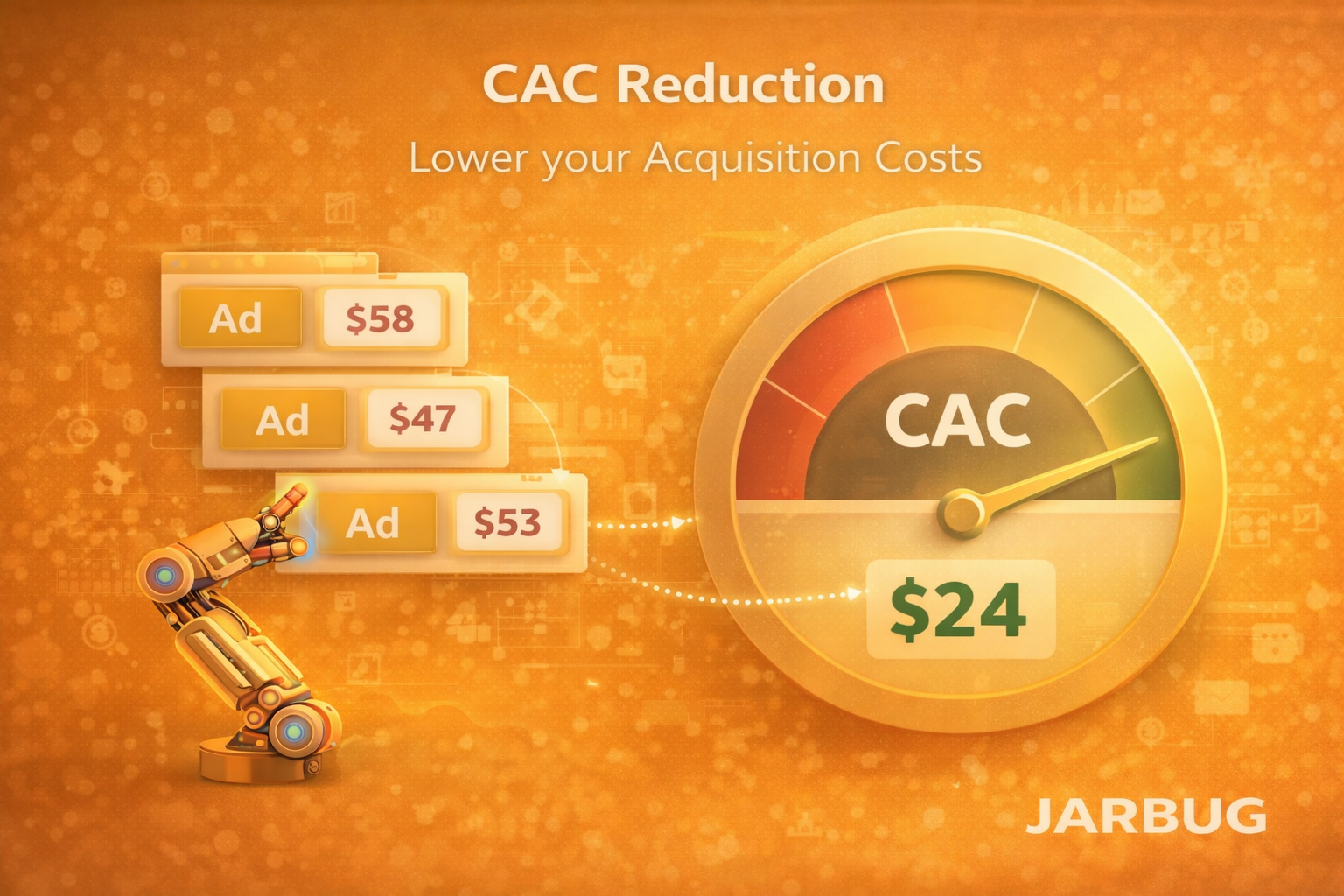
Organic search is one of the most efficient ways to grow an ecommerce business. Content automation for ecommerce allows you to rely less on paid ads since your products and categories start showing up in search results naturally. Automated internal linking builds up your site's authority, while metadata optimization helps your listings stand out. This leads to lower customer acquisition costs and healthier profit margins, especially for stores selling internationally or directly to customers.
| Traditional Paid Ads | Automated Organic SEO (Jarbug, Activepieces) |
|---|---|
| Rising acquisition costs | Lower CAC with organic reach |
| Limited scalability | Scale across all SKUs |
| Short-term ROI | Sustained revenue growth |
Automated Internal Linking and Metadata Updates
Managing internal links and metadata for thousands of products can be overwhelming. Automated platforms handle this by linking related products, boosting your SEO, and updating metadata across your whole site. With Jarbug, you can fix technical SEO problems and roll out changes in a fraction of the time it would take manually.
- Automated Internal Linking - Connect related products for better navigation and SEO
- Metadata Updates - Edit titles and descriptions for many pages at once
- Technical SEO Checks - Spot and fix site issues quickly
Who Should Use Content Automation?
Content automation for ecommerce is a good fit for direct-to-consumer brands, stores with lots of product categories, businesses with seasonal inventory, and anyone who wants to grow without building a large SEO team. If your product catalog changes often or you want to reach more international shoppers, automated SEO can help you stay competitive and increase revenue.
About Jarbug
Jarbug helps ecommerce and D2C brands publish and optimize content at scale, without the need for agencies or extra staff. From SmartPages to technical SEO updates, Jarbug supports teams that want more organic traffic and lower acquisition costs. Visit Jarbug
Frequently Asked Questions
What is content automation for ecommerce?
Content automation for ecommerce uses software to generate, optimize, and publish product and category pages, metadata, and internal links without manual effort.
How does content automation help ecommerce stores grow?
Automated content allows ecommerce stores to scale faster, capture more organic traffic, and reduce dependency on paid ads and manual SEO work.
Can content automation replace hiring writers or SEO agencies?
Yes, content automation platforms can handle tasks that typically require writers or agencies, making SEO scalable and cost-effective.
What types of ecommerce brands benefit most from content automation?
Brands with large catalogs, frequent product launches, or international stores benefit most, especially in categories like fashion, beauty, electronics, and home decor.
How does automated internal linking improve SEO?
Automated internal linking connects related products and categories, boosting site authority and improving rankings for long-tail and competitive keywords.
Is metadata optimization included in content automation platforms?
Most leading content automation platforms include bulk metadata optimization, allowing brands to update titles and descriptions across thousands of pages quickly.
How does programmatic SEO work in ecommerce?
Programmatic SEO automates the creation of targeted landing pages for specific keywords, variants, and regions, driving incremental organic traffic at scale.
Can content automation reduce customer acquisition costs for ecommerce brands?
By increasing organic rankings and reducing paid ad spend, content automation directly lowers customer acquisition costs for ecommerce stores.
Does Jarbug offer automated internal linking for ecommerce sites?
Jarbug provides automated internal linking, helping ecommerce brands build SEO authority and connect product pages without manual intervention.
How does Jarbug compare to traditional SEO agencies for ecommerce content automation?
Jarbug is up to 10x cheaper and faster to deploy than traditional SEO agencies, offering scalable content automation without developer or content team dependency.
You May Also Like
content automation for websites
metadata automation for ecommerce
seo automation for ecommerce
automation tool for ecommerce
keyword automation for ecommerce
seo automation for ecommerce sites
seo automation tool for ecommerce
seo automation for ecommerce stores
ecommerce seo automation
metadata automation tool for ecommerce
sales automation tool for ecommerce
ecommerce seo automation solution
fashion ecommerce seo automation
automate product tags ecommerce
automate product descriptions ecommerce
seo automation for electronics ecommerce