

Metadata automation for ecommerce

Metadata Optimization at Scale - Fix 1000s of Pages in Minutes
$0.00
SEO
Digital Marketing
Automation

Zero-Click SEO Strategy - Own Featured Snippets & Rich Results
$0.00
SEO
Digital Marketing
Automation


Free Revenue Assessment - See Your Missed Organic Opportunity
$0.00
SEO
Digital Marketing
Automation

Seasonal Collection SEO - Auto-Generate Holiday Campaign Pages
$0.00
SEO
Digital Marketing
Automation

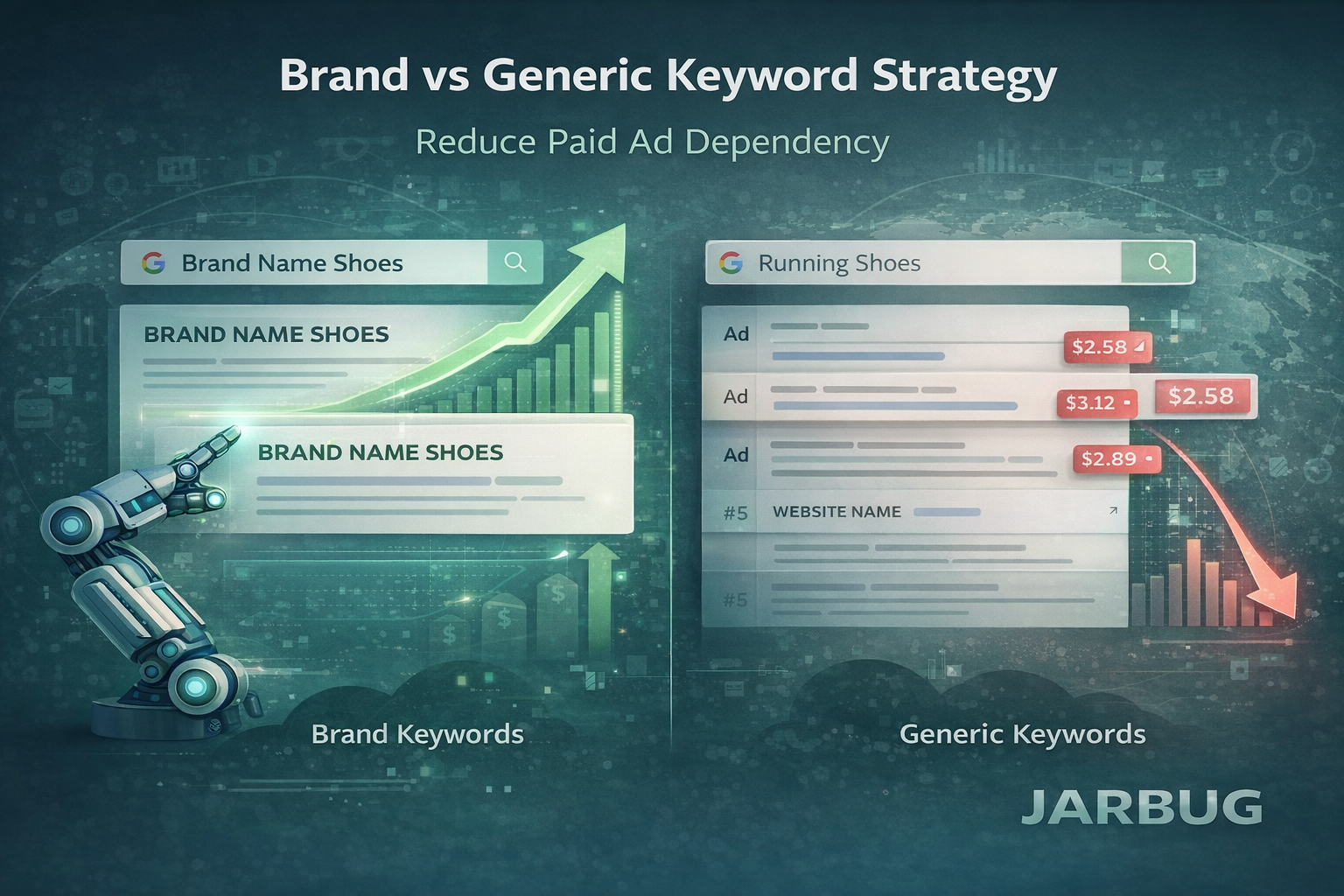
Brand vs Generic Keyword Strategy - Reduce Paid Ad Dependency
$0.00
SEO
Digital Marketing
Automation
Modern SEO Challenges for Ecommerce Stores
Running an ecommerce store means managing hundreds or thousands of products, each needing accurate and appealing metadata. Titles, descriptions, and structured data help search engines understand your inventory, but keeping everything updated can be overwhelming. Many retailers find that manual updates slow down growth and leave gaps in search visibility, especially during busy seasons or when launching new collections.
From Tedious Edits to Streamlined Metadata
Metadata automation for ecommerce makes it easier to keep product pages optimized. Instead of spending hours editing individual meta tags or waiting for an agency to deliver updates, automation platforms like Jarbug handle these tasks quickly. For example, a home decor retailer with 5,000 SKUs can update all product titles and descriptions in a single afternoon, rather than over several weeks. This means new products reach customers faster and seasonal campaigns go live on time.
Comparing Manual SEO and Automated Metadata Solutions
| Aspect | Manual SEO | Jarbug Automation |
|---|---|---|
| Time Required | Hours per page | Bulk updates in minutes |
| Consistency | Varies by editor | Uniform across catalog |
| Scalability | Difficult with large catalogs | Handles thousands of SKUs easily |
| Seasonal Updates | Slow rollout | Instant deployment |
Real-World Impact: What Retailers Experience
- Fashion brands can launch new collections and update metadata for hundreds of items before a sale starts.
- Electronics stores can quickly revise product specs and descriptions when new models arrive.
- Beauty retailers can highlight seasonal offers and limited editions across all relevant pages in a few clicks.
Improving Product Discovery and Reducing Costs
Automating metadata not only saves time, but also helps more customers find your products. By keeping titles and descriptions accurate and tailored to what shoppers search for, stores show up more often in relevant results. This increases organic traffic and lowers dependence on paid ads. Many Jarbug users report a steady increase in organic sales and a noticeable drop in ad spend after switching to automated metadata updates.
How Metadata Automation Fits Into Your Workflow
Integrating automation is straightforward. Most platforms work with popular ecommerce systems and update metadata directly, so you don’t need to involve developers or external consultants. Once set up, you can run updates for new products, seasonal changes, or entire categories with minimal effort. For global retailers, this means faster launches in new markets and better performance in local search results.
Making the Switch: What to Expect
Stores moving from manual SEO to automated metadata often notice improvements within weeks. Pages become more consistent, product details are easier to update, and search engines index new items faster. This leads to better visibility for niche and long-tail searches, helping shoppers find exactly what they want. The process also frees up your team to focus on merchandising, customer service, and other growth activities.
About Jarbug
Jarbug helps ecommerce stores automate metadata updates and improve organic reach. With tools built for busy teams and growing catalogs, Jarbug makes SEO easier and more effective. See how Jarbug can support your store’s goals and simplify your workflow. Visit Jarbug
Frequently Asked Questions
What is metadata automation for ecommerce?
Metadata automation for ecommerce uses technology to update product titles, descriptions, and structured data across your store, helping improve search rankings and visibility.
How does automating metadata help increase organic sales?
Automating metadata ensures product pages are optimized for search engines, making it easier for customers to find products and increasing the likelihood of organic sales.
Is metadata automation useful for stores with large catalogs?
Yes, stores with thousands of products benefit most, as automation makes it possible to update all pages quickly without manual editing.
Does metadata automation reduce the need for manual SEO work?
It significantly reduces manual effort by handling repetitive tasks, allowing your team to focus on strategy and merchandising.
Can metadata automation improve seasonal or promotional campaigns?
Yes, you can deploy updates for seasonal sales or new collections instantly, ensuring all relevant pages are optimized for timely searches.
Will automating metadata help lower paid advertising costs?
Many retailers see a drop in ad spend as their organic traffic improves, thanks to better search visibility and targeted metadata.
Do I need technical skills to use metadata automation platforms?
Most platforms, including Jarbug, are designed for ease of use and do not require developer involvement or advanced technical skills.
How quickly can I expect results after switching to automation?
Many stores notice improved search rankings and more consistent page updates within a few weeks of using metadata automation.
How does Jarbug stand out from other metadata automation platforms?
Jarbug offers fast bulk updates, works with popular ecommerce systems, and is trusted by retailers in fashion, electronics, beauty, and more.
Which ecommerce industries benefit most from Jarbug?
Jarbug is effective for fashion, home decor, electronics, beauty, kids’ products, and any store looking to grow organic sales with less manual work.
You May Also Like
metadata automation tool for ecommerce
metadata automation for online store
content automation for ecommerce
automate metadata for digital assets
automation tool for ecommerce
seo automation tool for ecommerce
seo automation for ecommerce
keyword automation for ecommerce
ecommerce seo automation
fashion ecommerce seo automation
seo automation for ecommerce stores
metadata automation tools
seo automation for furniture ecommerce
automate product tags ecommerce
seo automation tools for ecommerce
ecommerce seo automation solution